



Product Recommendations: How AI Is Transforming Personalized Shopping Experiences in 2026

 Jun 24,2026
  By Muhammad Danish
 Table of Contents
Why Product Recommendations Matter More Than Ever
Modern consumers are overwhelmed with choices. Whether they are shopping for electronics, fashion, beauty products, or software, customers expect brands to help them find the right products quickly. This is where product recommendations have become one of the most powerful tools in digital marketing.
Businesses are increasingly using artificial intelligence (AI) and data-driven technologies to deliver personalized recommendations that improve customer experiences, increase conversions, and boost revenue. From Amazon and Netflix to Shopify stores and B2B platforms, product recommendation systems are now a core component of successful marketing strategies.
As AI adoption accelerates across enterprises, product recommendations are evolving from simple “Customers Also Bought” suggestions into intelligent systems capable of understanding customer intent and predicting future needs.
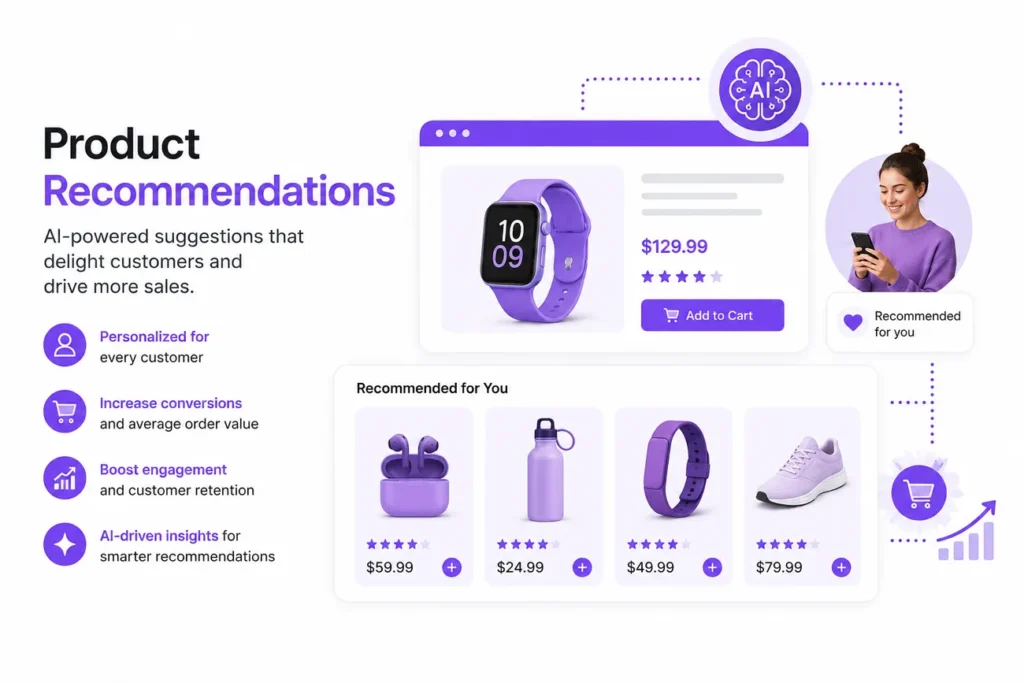
What Are Product Recommendations?
Product recommendations are personalized suggestions presented to customers based on their preferences, browsing behavior, purchase history, demographics, or similarities with other users.
These recommendations can appear in various places, including:
- Product pages
- Homepage sections
- Search results
- Email campaigns
- Mobile apps
- Shopping carts
- Checkout pages
- SMS and push notifications
Their purpose is simple: help customers discover relevant products while increasing sales opportunities for businesses.
Why Product Recommendations Are Important
Personalized recommendations have become essential because consumers expect tailored experiences. Generic marketing messages are losing effectiveness, while personalized interactions drive stronger engagement.
Some key benefits include:
Increased Conversion Rates
Customers are more likely to purchase when presented with products that align with their interests and needs.
Higher Average Order Value
Cross-selling and upselling recommendations encourage customers to add complementary or premium products to their purchases.
Better Customer Experience
Relevant suggestions reduce decision fatigue and make shopping more enjoyable.
Improved Customer Retention
Personalized experiences strengthen relationships and encourage repeat purchases.
Enhanced Revenue Growth
Many leading e-commerce businesses attribute a significant percentage of their sales to recommendation engines.
Types of Product Recommendations
Different recommendation strategies serve different business objectives.
1. Personalized Recommendations
These suggestions are based on individual customer behavior, including:
- Previous purchases
- Browsing history
- Wish lists
- Search activity
Examples include:
- Recommended for You
- Inspired by Your Browsing
- Based on Your Interests
2. Best-Selling Products
Displaying popular products helps customers discover items that are trending or widely trusted.
These recommendations are especially useful for:
- New visitors
- Seasonal campaigns
- Product launches
3. Frequently Bought Together
This approach encourages cross-selling by suggesting complementary products.
For example:
- Laptop + wireless mouse
- Smartphone + protective case
- Camera + memory card
This strategy increases average order value while improving convenience for customers.
4. Recently Viewed Products
Showing recently viewed items helps shoppers resume their buying journey without searching again.
It also reduces friction and improves conversion rates.
5. Similar Product Recommendations
Customers who are comparing products appreciate alternative suggestions with:
- Different price points
- Additional features
- New designs
- Better ratings
This helps keep customers engaged instead of losing them to competitors.
How AI Is Revolutionizing Product Recommendations
Artificial intelligence is transforming recommendation systems from static rules into dynamic, real-time experiences.
Traditional recommendation engines relied heavily on predefined categories and manual segmentation. Modern AI systems can analyze enormous amounts of data and deliver highly personalized experiences instantly.
AI Uses Multiple Data Sources
AI-powered recommendation engines analyze:
- Purchase history
- Browsing behavior
- Search queries
- Customer demographics
- Device information
- Time of day
- Seasonal trends
- Product popularity
This enables businesses to create smarter and more accurate recommendations.
Predictive Analytics
AI can identify patterns and predict what customers are likely to purchase next.
For example, if a customer regularly buys skincare products every month, AI can proactively recommend replenishment items before they run out.
Real-Time Personalization
Modern recommendation systems continuously adapt based on customer behavior.
If a shopper suddenly begins exploring fitness products, the recommendation engine can instantly adjust and showcase relevant equipment and accessories.
Generative AI and Conversational Shopping
Generative AI is introducing a new era of personalized shopping experiences.
AI assistants can now:
- Understand customer preferences.
- Answer product questions.
- Compare alternatives.
- Generate personalized suggestions.
- Provide shopping guidance.
This creates more interactive and human-like experiences that improve customer satisfaction.
How Enterprises Are Using Product Recommendations
Businesses across industries are adopting AI-powered recommendation systems.
E-commerce
Online retailers use recommendations to:
- Increase sales
- Reduce cart abandonment
- Improve customer loyalty
Popular examples include:
- Related products
- Frequently bought together
- Trending items
Streaming Platforms
Entertainment companies recommend:
- Movies
- TV shows
- Music
- Podcasts
These suggestions increase engagement and customer retention.
B2B Companies
Enterprise organizations are increasingly using AI to recommend:
- Software solutions
- Service packages
- Training programs
- Upsell opportunities
B2B personalization is becoming a major trend as companies seek better customer experiences.
Financial Services
Banks and fintech companies use recommendation engines to suggest:
- Credit cards
- Investment products
- Insurance solutions
- Savings accounts
These recommendations improve customer engagement while increasing revenue opportunities.
Best Practices for Effective Product Recommendations
Not all recommendation systems produce great results. Businesses should follow these best practices.
Focus on Relevance
Customers value relevance more than quantity.
Showing five highly relevant products is often more effective than displaying twenty random suggestions.
Use Customer Data Responsibly
Privacy and trust are becoming increasingly important.
Businesses should:
- Be transparent about data usage.
- Respect privacy regulations.
- Provide secure experiences.
Test and Optimize
Continuous testing helps improve recommendation performance.
Marketers should evaluate:
- Click-through rates
- Conversion rates
- Average order value
- Revenue per visitor
Data-driven optimization ensures long-term success.
Combine Human Creativity with AI
One of the biggest discussions among marketing leaders is that AI should enhance—not replace—human expertise.
Successful brands combine:
- AI-driven insights
- Customer understanding
- Brand voice
- Creative storytelling
This balance creates authentic experiences that resonate with consumers.
Future Trends in Product Recommendations
The future of product recommendations will be driven by advanced AI capabilities.
Agentic AI
AI agents will move beyond recommendations and actively assist customers throughout the buying journey.
These systems may:
- Compare products automatically.
- Monitor prices.
- Suggest bundles.
- Handle customer support.
- Personalize entire shopping experiences.
Hyper-Personalization
Recommendations will become increasingly individualized, taking into account:
- Context
- Intent
- Location
- Real-time behavior
Voice and Conversational Commerce
Customers will rely more on AI assistants and voice interfaces to discover products and receive recommendations.
Multi-Channel Personalization
Businesses will synchronize recommendations across:
- Websites
- Mobile apps
- Emails
- Social media
- Messaging platforms
This will create seamless customer experiences across every touchpoint.
Read more: AI Chatbot Development: The Ultimate Guide for Businesses in 2026
Conclusion
Product recommendations have become one of the most valuable tools in modern marketing. As AI adoption continues to expand across enterprises, recommendation engines are becoming smarter, faster, and more personalized.
Businesses that leverage AI-powered product recommendations can improve customer experiences, increase conversions, and drive sustainable growth. However, the most successful companies understand that technology alone is not enough.
The future belongs to organizations that combine artificial intelligence with human creativity, customer understanding, and data-driven strategies. In an increasingly competitive digital landscape, delivering the right product to the right customer at the right time will remain a critical advantage.


 Aug 18, 2026