



Delaying Digital Upgrades: 7 Hidden Risks in 2026

 Jun 30,2026
  By Muhammad Danish
Standing still feels safe. The numbers say otherwise.
Table of Contents
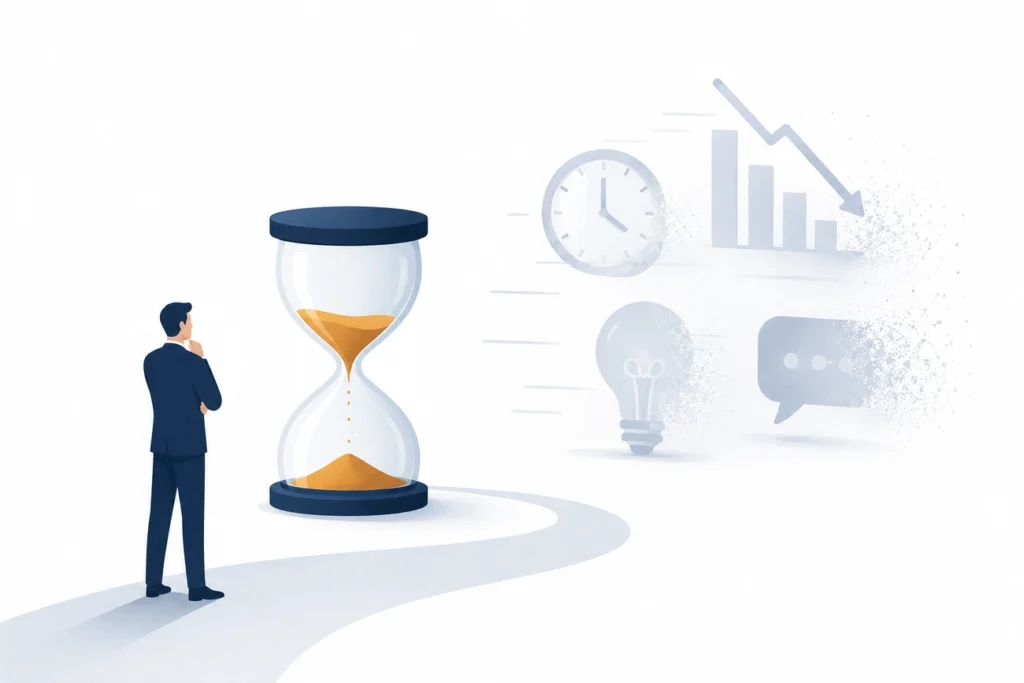
Delaying digital upgrades is one of the most common — and most expensive — decisions a business can make without realizing it’s making one. “We’ll automate next quarter.” “The website redesign can wait.” “We don’t have bandwidth for a chatbot right now.” Each excuse sounds reasonable on its own. Together, they add up to a slow, steady drain on revenue, talent, and competitiveness that most businesses don’t notice until it’s already cost them.
At Cloud Fold Studio, we’ve watched this pattern play out across dozens of businesses. The ones who delay digital upgrades the longest almost always end up paying more to catch up than they would have spent staying current. The frustrating part is that none of it shows up as a single dramatic event. It builds quietly, in small inefficiencies that compound month after month until the gap becomes too big to ignore.
This article breaks down exactly where that cost comes from, what the data says about it, and what businesses that finally stop delaying digital upgrades tend to do differently.
What “Delaying Digital Upgrades” Really Means
Delaying digital upgrades doesn’t always look like a deliberate choice. Sometimes it’s a website that hasn’t been touched since 2019. Sometimes it’s a sales process still running through spreadsheets and email threads. Sometimes it’s simply never getting around to the chatbot or automation tools that have been on the to-do list for a year.
Whatever form it takes, the underlying pattern is the same: a gap opens between what your business needs and what your systems can actually do, and that gap doesn’t close on its own. It tends to widen quietly, while everyone is focused on day-to-day operations instead of the systems running underneath them.
What makes delaying digital upgrades so easy is that there’s rarely an urgent trigger forcing the issue. Nothing breaks outright. The website still loads, just slowly. The spreadsheet still works, it just takes three extra steps. Each individual workaround feels manageable, which is exactly why the bigger pattern goes unnoticed for so long.

The Direct Financial Cost of Delaying Digital Upgrades
The financial cost of delaying digital upgrades is bigger than most businesses expect. Manual, paper-based processes alone cost businesses an estimated trillions of dollars globally each year once you factor in data entry errors, postage, and lost time.
It’s not just paperwork. Slow websites lose visitors before they convert. Missed after-hours inquiries become leads that never call back. Every manual task that automation could handle is an hour of paid labor spent on something that didn’t need a human at all.
None of these costs arrive as a single invoice, which is exactly why they’re so easy to underestimate. A few percent fewer conversions here, a handful of missed leads there, a little extra labor every week, none of it looks alarming in isolation. Added together over a year, it’s often the equivalent of a full-time salary spent on inefficiency rather than growth.
How Delaying Digital Upgrades Compounds Over Time
Technical debt is the technical term for what happens when businesses keep delaying digital upgrades. Outdated systems don’t stay the same size problem, they grow. A website built years ago becomes harder to update as web standards move forward. A process that worked fine with five employees turns chaotic at fifty.
Research on digital transformation shows that companies adopting modern, integrated tools see real gains in customer satisfaction and efficiency, while businesses that keep delaying transformation fall further behind competitors who already made the switch. The longer the gap goes unaddressed, the more expensive and disruptive it becomes to close.
This is why businesses that wait the longest often face the biggest, most disruptive overhauls instead of a series of manageable updates. Delaying digital upgrades for years rather than addressing them gradually tends to turn a moderate project into a major one, both in cost and in the operational disruption of finally tackling it all at once.

The Cost of Delaying Digital Upgrades, in Numbers
It helps to see the scale of this in concrete terms. A few figures worth sitting with: manual, paper-based invoicing alone is estimated to cost businesses trillions of dollars globally each year in direct and indirect costs combined. Roughly six in ten organizations estimate they could save six or more hours per employee, per week, simply by automating processes they currently handle by hand. And businesses with stronger digital customer experiences have reported meaningfully higher customer satisfaction scores than those still relying on outdated systems.
None of these numbers are about cutting-edge technology or massive enterprise budgets. They’re about ordinary inefficiencies that most small and mid-sized businesses are quietly absorbing every single week, simply because nobody has stopped to add up the cost of delaying digital upgrades across the whole business.
The Competitive Cost of Waiting
Every business is being compared to whoever the customer looked at next. If a competitor has a faster website, a responsive chatbot, or a smoother checkout process, that comparison happens automatically, whether you’re aware of it or not.
Delaying digital upgrades doesn’t just mean staying the same. It means competitors who didn’t wait get to define what “normal” looks like to your shared customers, while your business is still working to catch up to a bar that keeps rising.
This matters most in industries where switching costs are low. A customer doesn’t need a strong reason to choose a competitor with a smoother digital experience, they just need one moment of friction with you and an easier option nearby. Every quarter spent delaying digital upgrades is a quarter where someone else gets to make that first impression instead.
The Human Cost: Burnout and Turnover
The cost of delaying digital upgrades isn’t only external. Employees who spend hours each week on repetitive manual work, like data entry, scheduling, or answering the same customer questions, get worn down by it.
Skilled employees end up doing low-value busywork instead of the job they were hired for. That disengagement often leads to turnover, and replacing an employee is far more expensive than the automation tool that could have kept them focused on meaningful work in the first place.
There’s also a recruiting angle that’s easy to overlook. Candidates evaluating a job offer notice clunky internal tools during interviews and onboarding just as much as customers notice a slow website. A business that’s visibly behind on its systems can struggle to attract the same caliber of talent as one that clearly invests in modern tools.
Customer Expectations Won’t Wait Either
Customers don’t judge your business against where it used to be. They judge it against the best digital experience they had anywhere else that week. If a competitor responds instantly through a chatbot and your business takes a day to reply to an email, that gap shapes how customers perceive you.
This is part of why delaying digital upgrades is so costly: the bar keeps moving even while your systems stay still. The longer the wait, the wider the gap between what you offer and what customers now expect as standard.
It’s worth noting this isn’t really about chasing trends. Customers rarely care whether you have the newest technology for its own sake, they care whether interacting with your business is easy. Delaying digital upgrades tends to show up as friction long before it shows up as anything customers could articulate directly, which makes it easy to miss until it’s already affecting retention.
A Familiar Pattern: How Delaying Digital Upgrades Plays Out
A common scenario looks something like this: a growing service business relies on a website built years ago and a manual intake process run through email and spreadsheets. For a while, it works fine. As the business grows, response times slow down, leads start slipping through the cracks, and staff spend more and more time on coordination instead of actual client work.
Nobody decided to fall behind on purpose. Each quarter, fixing it felt like something that could wait until things calmed down. By the time leadership finally addresses it, the fix usually costs more, takes longer, and causes more disruption than it would have if they had tackled it eighteen months earlier. This is the pattern behind most of the businesses we work with: not a single bad decision, but many small ones to keep delaying digital upgrades a little longer.
How to Stop Delaying Digital Upgrades the Smart Way
There’s rarely a perfect moment to invest in a new website, automation, or chatbot. There will always be a reason it feels easier to wait. But businesses that benefit most don’t wait for ideal conditions, they treat digital upgrades as ongoing maintenance instead of a someday project.
A few practical starting points that tend to work well for businesses ready to stop delaying digital upgrades:
- Start with the most painful bottleneck, not the most exciting upgrade. Fix the process costing the most time or leads first.
- Pick one area to automate this quarter rather than planning an overhaul that never gets approved.
- Set a recurring review, even quarterly, so outdated systems get caught early instead of accumulating for years.
- Treat your website and tools as living systems that need maintenance, not a one-time project you finish and forget.
A simple test: if your website, response time, or internal processes would embarrass you in front of a new customer today, the cost of delaying digital upgrades another quarter is almost certainly higher than the cost of fixing it now.
Not sure where your business stands?
At Cloud Fold Studio, we help businesses stop delaying digital upgrades without the overwhelm, whether that means a faster website, a chatbot that actually converts, or automation that gets hours back into your week. Reach out for a free assessment of where your current setup might be costing you more than you think.
Sources: SOTI, “The Costs of Delaying Digital Transformation”; Introduction, “The Hidden Costs of Delaying Digital Transformation.”


 Aug 18, 2026